
CUHK landmark study identifies key oncogenic driver miR-21 in pancreatic cancer Pioneer Nb-RIBOTAC technology for dual-targeted attack to eliminate tumours

Pancreatic cancer, also known as the silent killer, is among Hong Kong’s five deadliest cancers, with a dismal five-year survival rate of less than 10%. A research team from the Faculty of Medicine at The Chinese University of Hong Kong (CU Medicine) has identified miR-21 as a critical oncogenic driver in pancreatic cancer. Using a precision nanobody-RIBOTAC platform, the team developed a dual-targeted therapeutic strategy that degrades both cancer cells and the oncogenic miR-21, effectively eliminating tumours. This breakthrough addresses the current lack of effective targeted therapies for pancreatic cancer and holds promise for pioneering new approaches to the treatment of other cancers. This landmark study was published in the renowned journal Advanced Science.
According to the Hong Kong Cancer Registry, it claimed 918 lives in 2023, surging by 57% over the past decade to account for 6.2% of all cancer deaths. Pancreatic ductal adenocarcinoma (PDAC) is the most common type, accounting for about 95% of cases and typically occurring in the head of the pancreas. Because the pancreas is deeply located within the body, early tumours are rarely detected. By the time a patient begins to experience symptoms, the cancer is often already large or has spread to other organs, so most patients are diagnosed at an advanced stage. In addition, the dense desmoplastic stroma surrounding pancreatic tumours makes it difficult for conventional therapies to penetrate, leading to drug resistance and leaving patients with a dismal five-year survival rate of less than 10%.
miR-21 is a key oncogene driving cancer progression
Recent advances in RNA-targeting technologies, including ribonuclease-targeting chimeras (RIBOTACs), offer a promising avenue for degrading disease-associated RNAs by recruiting endogenous RNases such as RNase L (Ribonuclease L). Nevertheless, conventional RIBOTACs suffer from limited tumour selectivity and bioavailability, as their small-molecule scaffolds often lack efficient tissue penetration and cell-specific delivery.
In response to the therapeutic challenges of PDAC, a research team led by Dr Wang Xin, Associate Professor, and Dr Luo Tianli, Research Associate, both from the Department of Surgery at CU Medicine, has identified microRNA-21 (miR-21) as a critical oncogenic driver in PDAC through analysis of a proprietary pan-gastrointestinal (PAN-GI) cancer multi-omics database. miR-21 is a consistently overexpressed oncomiR not only in PDAC but also across multiple gastrointestinal malignancies, including colorectal and gastric adenocarcinomas. In PDAC specifically, miR-21 emerges as a particularly crucial regulator of tumour progression, with its overexpression strongly correlating with advanced disease stage and poor survival outcomes.
Dr Luo, first author of the study, explains: “miR-21 orchestrates a complex oncogenic network by simultaneously suppressing key tumour suppressors and activating proliferative and anti-apoptotic pathways, thereby driving tumour growth and conferring resistance to conventional therapies. Despite its well-established role in PDAC pathogenesis, therapeutic targeting of miR-21 has remained elusive due to the inherent challenges of RNA-directed drug development and the unique biological barriers presented by the dense desmoplastic stroma.”
Efficient tumour-specific uptake without injuring the crucial organs

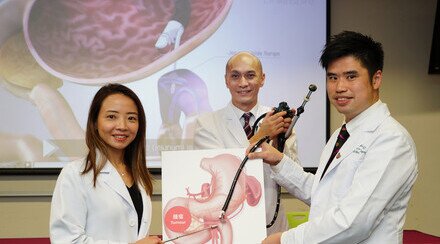
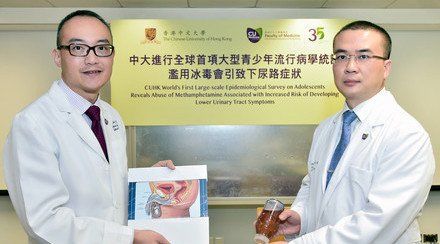
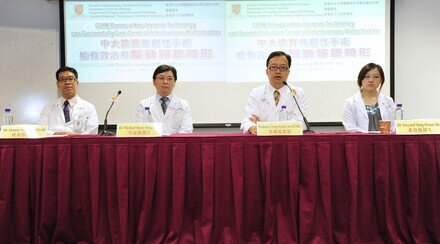
A research team led by Dr Wang Xin (right), Associate Professor, and Dr Luo Tianli, Research Associate, both from the Department of Surgery at CU Medicine, has identified miR-21 as a critical oncogenic driver in pancreatic cancer. Using a precision Nb-RIBOTAC platform, the team developed a dual-targeted therapeutic strategy that blocks the progression of pancreatic ductal adenocarcinoma and is believed to have potential applications for a range of oncogenic genes and other gastrointestinal tumours.
A recent study by the research team, which was awarded a Gold Medal at the 51st International Exhibition of Inventions Geneva, found that integrating nanobody delivery with the RIBOTAC platform can precisely target and eliminate oncogenic RNA. Building on this, the team further employed a dual-targeting mechanism: first, using an anti-EGFR (epidermal growth factor receptor) nanobody to target EGFR-overexpressing PDAC cells, and then employing a specific linker to deliver the degrader directly into the tumour, where it targets and degrades miR-21. Preclinical RT-qPCR studies have shown that, in EGFR-overexpressing cancer cells, delivering the drug conjugate via the nanobody can effectively reduce miR-21 levels by 60%.
Dr Luo says: “Unlike conventional chemotherapy, this novel drug conjugate employs an anti-EGFR nanobody for precise tumour recognition, coupled with a tumour microenvironment-responsive linker that releases the active payload only within the tumour. This dual-targeting design ensures selective elimination of cancer cells with reduced systemic toxicity.”
Dr Wang, co-corresponding author of the study, adds: “The new drug conjugate achieved substantial tumour accumulation within three hours of administration in the mouse model, while conventional anti-EGFR full antibodies barely reached the tumour. At 48 hours post-injection, after blood clearance was complete, the tumour signal became more pronounced, indicating efficient tumour-specific uptake and prolonged retention without injuring the crucial organs."
Dr Wang states: “This is the first proof-of-concept study to demonstrate that oncogenic miR-21 can be selectively eliminated through RNA degradation, thereby blocking the progression of PDAC. Our team plans to carry out further clinical studies to translate research findings into clinical applications, with the aim of accelerating benefits for patients with PDAC. The significance of this research extends beyond miR-21, as the approach can potentially be applied to a range of oncogenic RNAs. Although the work is still at the preclinical stage, the findings are expected to have broad applications in oncology and for other challenging RNA targets, opening up a new therapeutic direction for hard-to-treat oncogenes.”