
CUHK study identifies protective T cells as novel therapeutic target in atherosclerosis Opening breakthrough avenues to treat coronary artery disease and stroke

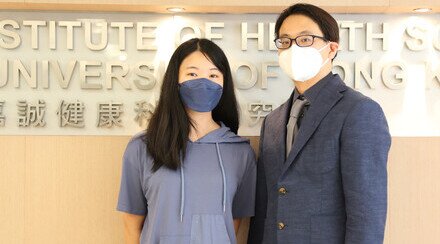
CU Medicine study revealed that protective CD8⁺ Tregs can serve as a novel therapeutic target in atherosclerosis. Research team members include (from right) Professor James Lau Yun-wong, Yao Ling Sun Professor of Surgery; corresponding author of the study Professor Kathy Lui Oi-lan, co-first author of the study Dr Hou Yangfeng and first author of the study Dr Gao Wentao.
New research by the Faculty of Medicine of The Chinese University of Hong Kong (CU Medicine) revealed that CD8⁺ regulatory T cells (protective CD8⁺ Tregs) can serve as a novel therapeutic target in atherosclerosis, a condition that can lead to complications like coronary artery disease and stroke.
CD8⁺ T cells can be classified into “protective CD8⁺ Tregs” and “effector CD8⁺ T cells”. The former to suppress excessive inflammation and prevent autoimmune hyperreactivity, whereas the latter are responsible for clearing virus-infected cells and tumour cells, thereby inducing inflammatory responses. Researchers found that effector CD8⁺ T cell subsets impair normal vascular cell function and accelerate atherosclerosis progression. The study further demonstrates that inducing protective CD8⁺ Tregs with a non-lytic anti-CD8α antibody restores Notch signalling in vascular smooth muscle cells (VSMC), suppresses aberrant proliferation and phenotypic switching, and consequently slows atherosclerosis progression. Featured as the cover story in the leading international journal Circulation Research, the breakthrough offers an innovative immunotherapeutic strategy to prevent life-threatening atherosclerotic cardiovascular disease. atherosclerotic cardiovascular disease.
Imbalance in the “dialogue” between immune and vascular cells promotes the pathogenesis of atherosclerosis
Atherosclerosis is a leading cause of death worldwide, underlying coronary artery disease and stroke. When lipids and immune cells accumulate in the vessel wall, they form plaques in the arterial intima, narrowing or even blocking the arterial lumen.
VSMCs are the predominant cell type in the medial layer of the vessel wall. Under normal conditions, they remain quiescent and contractile, maintaining vascular structure and tone to regulate vascular resistance and blood pressure. The medial layer is relatively immune-privileged, physically shielding VSMCs from immune cells. However, as atherosclerosis progresses, VSMCs undergo phenotypic switching from a contractile to a synthetic state and can even transdifferentiate into macrophage-like cells, promoting plaque growth and instability, making plaques prone to rupture and triggering thrombosis, leading to myocardial infarction and stroke.
Professor James Lau Yun-wong, Yao Ling Sun Professor of Surgery in the Department of Surgery at CU Medicine, said: “CD8⁺ T cells are abundant in advanced atherosclerotic plaques, yet how they influence VSMCs has remained unclear. In this study, we first confirmed the relevant mechanisms and further identified a novel strategy for treating atherosclerosis through mouse experiments.”
Inhibition of the immune cell–vascular cell signalling pathway accelerates disease progression
The study demonstrates that effector CD8⁺ T cells outnumber protective CD8⁺ Tregs during atherosclerosis, thereby suppressing the key Notch signalling pathway that maintains VSMC quiescence. When this signalling pathway is inhibited, VSMCs undergo aberrant proliferation and phenotypic switching.
By analysing single-cell RNA-sequencing datasets and cell–cell communication networks from human atherosclerotic plaques, the research team identified CD8⁺ T cells as the major immune cell population most frequently interacting with VSMCs, with CD8α serving as the communication bridge. They further performed in vivo adoptive transfer of CD8⁺ T cells into atherosclerotic mice and confirmed that inhibition of VSMC Notch signalling exacerbated atherosclerosis.
“Taming” the immune system: a new paradigm for cardiovascular therapy
Because CD8⁺ T cells are critical for immune surveillance against infection and cancer, the team tested whether blocking CD8α could suppress the pathogenic activity of effector CD8⁺ T cells without depleting CD8⁺ T cells.
They found that a non-lytic anti-CD8α antibody, which inhibits effector CD8⁺ T cell activation while preserving cell numbers, induced and expanded protective CD8⁺ Tregs, significantly reduced plaque area and lipid content, and increased collagen content in atherosclerotic mice—hallmarks of plaque stabilisation.
Professor Kathy Lui Oi-lan, Professor in the Department of Chemical Pathology at CU Medicine and corresponding author of the study, said: “This study has, for the first time, mapped the immune-vascular ‘dialogue’ between CD8⁺ T cells and VSMCs. We discovered that CD8⁺ T cells are not merely ‘soldiers’ of the immune system but are key regulators of VSMC behaviour in atherosclerosis. By precisely inducing protective CD8⁺ Treg subsets, we can restore VSMC homeostasis and stabilise plaques, offering a novel therapeutic strategy against atherosclerosis, one that ‘tames’ rather than ‘eliminates’ the immune system.”
The study was conducted in collaboration with Professor Zhou Bin from the Centre for Excellence in Molecular Cell Science at the Chinese Academy of Sciences and Professor Herman Waldmann at the University of Oxford.