
Search
What are you looking for?
Start main content

Press Releases

Press Releases

https://www.med.cuhk.edu.hk/press-releases/cuhk-transforms-ginkgo-compound-to-promising-drug-candidate-targeting-brain-inflammation-to-combat-strokes-and-alzheimer-s-disease

CUHK transforms ginkgo compound to promising drug candidate targeting brain inflammation to combat strokes and Alzheimer’s disease

A research team at The Chinese University of Hong Kong (CUHK)’s Faculty of Medicine (CU Medicine), has employed precision “molecular editing” on a natural compound found in ginkgo trees to develop a potent synthetic drug candidate, BB56, capable of suppressing harmful brain inflammation. Published in the international journal Advanced Science, the breakthrough sheds new light on the discovery of neuroprotective agents for developing new medicines to combat neurological conditions such as stroke and Alzheimer's disease.


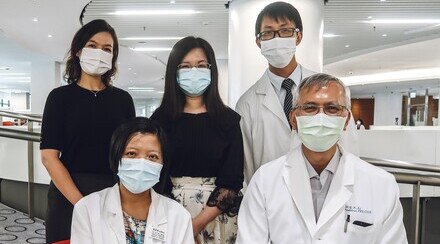
research team

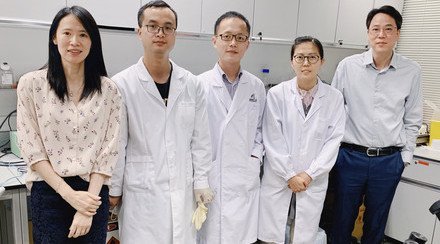
The CU Medicine research team led by Professor Billy Ng Wai-lung, Associate Professor from the School of Pharmacy (front row, centre).

Neurological disorders affect more than three billion people globally, representing over 40 percent of the world’s population[1]. Neuroinflammation, triggered when a dysregulated immune system turns the brain’s protective mechanisms into destructive forces, is increasingly recognised as an important contributor to the major disorders. Developing therapeutics capable of interrupting this inflammation process is vital to preserving essential cognitive functions, including memory, motor skills and the ability to live independently.


Creating promising drug candidate through molecular editing


Bilobalide, a natural compound found exclusively in ginkgo leaves and seeds, is known for its reported neuroprotective and anti-inflammatory properties that may help protect nerve cells. However, its complex and chemically fragile structure makes its systematic modification into a viable pharmaceutical drug difficult.


To overcome these challenges, the research team led by Professor Billy Ng Wai-lung, Associate Professor from the School of Pharmacy, CU Medicine, adopted a strategy of “molecular editing”. The chemical modification technique can selectively remodel key parts of bilobalide’s complex structure while preserving its distinctive core, allowing researchers to create molecules that are more stable and easier to modify. 


Building on a 2024 study that created the precursor compound BB10, the team developed BB56, an optimised derivative featuring strategic fluorine insertion. This structural addition significantly boosts cellular potency, resulting in more effective inhibition of the inflammatory process.


Professor Ng remarked: “Molecular editing opens new possibilities for drug development. We can create and compare a family of related molecules, identify which chemical changes improve their activity and direct further work towards the strongest leads. The approach allows researchers to develop original molecules systematically from a natural starting point and explore their potential as treatments for stroke and neurodegenerative diseases such as Alzheimer’s disease.”


Uncovering the anti-inflammatory mechanism to inform drug design


In preclinical experiments using lab-cultured microglia, the brain's primary immune cells, and larval zebrafish models with induced brain inflammation, the research team successfully validated BB56’s anti-inflammatory efficacy and decoded its underlying biological mechanism.


Overactivated microglia can elevate the release of prolyl endopeptidase (PREP), an enzyme that normally helps regulate and maintain brain function. However, when present at excessive levels, PREP may disrupt protective signalling and promote inflammatory responses.


The research team found that BB56 can bind to and inhibit PREP, effectively blocking its activity. They further showed that by inhibiting PREP, BB56 reduces the production of inflammatory molecules, dampens inflammation-related signalling pathways and suppresses the overactivation of microglia. These findings highlight BB56's potential as a promising lead compound for the development of new medicines for neuroinflammatory disorders. The research team has filed patent applications in China and the United States and through the World Intellectual Property Organization for their discoveries.


Professor Ng added: “This study demonstrates the translational journey from molecular editing and biological discovery to target identification, optimisation and in vivo validation. Rather than simply studying what nature provides, we aim to use techniques in modern chemistry and biochemistry to redesign natural molecules into new therapeutic leads. Our long-term ambition is to advance original drug discoveries made here in Hong Kong into new medicines that benefit patients suffering from neurological diseases worldwide.”


[1] According to the Global Status Report on Neurology released by the World Health Organization in October 2025.

More Press Releases

CUHK develops a novel antiviral molecular scaffold Enabling safer and more efficient antiviral drug design against viral mutations

CUHK develops a novel antiviral molecular scaffold Enabling safer and more efficient antiviral drug design against viral mutations

Research
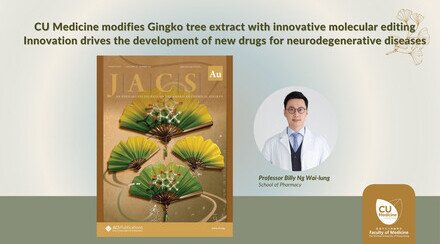
CU Medicine modifies Gingko tree extract with innovative molecular editing  Innovation drives the development of new drugs for neurodegenerative diseases

CU Medicine modifies Gingko tree extract with innovative molecular editing Innovation drives the development of new drugs for neurodegenerative diseases

Research
CUHK discovers groundbreaking method for precise regulation of human proteins Paving the way for the development of new drugs for numerous diseases

CUHK discovers groundbreaking method for precise regulation of human proteins Paving the way for the development of new drugs for numerous diseases

Research
A Global Study Led by CU Medicine and HKUMed Discovers  a Hepatitis C Virus Drug as Potent Treatment for COVID-19

A Global Study Led by CU Medicine and HKUMed Discovers a Hepatitis C Virus Drug as Potent Treatment for COVID-19

Research
CUHK Advocates Atrial Fibrillation Screening and Drug Education to Reduce Risk of Stroke among Elderly

CUHK Advocates Atrial Fibrillation Screening and Drug Education to Reduce Risk of Stroke among Elderly

Clinical service
CUHK Research Reveals that Stroke Triggers Alzheimer’s Dementia Risk of Alzheimer’s Dementia Can be Reduced by Enhancing Vascular Health

CUHK Research Reveals that Stroke Triggers Alzheimer’s Dementia Risk of Alzheimer’s Dementia Can be Reduced by Enhancing Vascular Health

Research
How does the brain overcome the limits of multitasking?  Neuroscientists at CUHK and CityUHK reveal a dynamic neural strategy and hints for artificial intelligence training

How does the brain overcome the limits of multitasking? Neuroscientists at CUHK and CityUHK reveal a dynamic neural strategy and hints for artificial intelligence training

Research
CUHK unveils the world’s first CD4+ Treg cell heart regeneration mechanism Offering a new target for heart repair treatment

CUHK unveils the world’s first CD4+ Treg cell heart regeneration mechanism Offering a new target for heart repair treatment

Research
CUHK finds methadone far more effective than morphine for post-cardiac surgery pain relief: with 60% less acute pain and 70% lower opioid dependence

CUHK finds methadone far more effective than morphine for post-cardiac surgery pain relief: with 60% less acute pain and 70% lower opioid dependence

Research
Jockey Club PHARM+ Community Medication Service Network: Medication Safety Community Day Promoting Professional Service from Community Pharmacists; Elevating Medication Literacy, Self-Management of Health Conditions and Health Awareness at the Community Level

Jockey Club PHARM+ Community Medication Service Network: Medication Safety Community Day Promoting Professional Service from Community Pharmacists; Elevating Medication Literacy, Self-Management of Health Conditions and Health Awareness at the Community Level

Health Campaign
CU Medicine reveals dietary interventions with fermentable carbohydrates  boosts metformin efficacy in type 2 diabetes prevention

CU Medicine reveals dietary interventions with fermentable carbohydrates boosts metformin efficacy in type 2 diabetes prevention

Research
CUHK develops first-of-its-kind magnetic tip rotatable microcatheter for precise, safe and rapid treatment of acute ischemic strokes

CUHK develops first-of-its-kind magnetic tip rotatable microcatheter for precise, safe and rapid treatment of acute ischemic strokes

Research
CU Medicine and PWH pioneer low-field MRI technology to launch Hong Kong’s first one-stop acute stroke management model

CU Medicine and PWH pioneer low-field MRI technology to launch Hong Kong’s first one-stop acute stroke management model

Research
CUHK develops novel retrievable nanorobots for targeted and enhanced thrombolysis potentially saving stroke patients from brain damage

CUHK develops novel retrievable nanorobots for targeted and enhanced thrombolysis potentially saving stroke patients from brain damage

Research
CUHK study reveals an elevated stroke risk with switching oral anticoagulants in atrial fibrillation patients who developed breakthrough strokes during anticoagulation therapy

CUHK study reveals an elevated stroke risk with switching oral anticoagulants in atrial fibrillation patients who developed breakthrough strokes during anticoagulation therapy

Research
A CUHK-led international team develops the world’s first AI model using fundus photographs alone to detect Alzheimer’s disease

A CUHK-led international team develops the world’s first AI model using fundus photographs alone to detect Alzheimer’s disease

Research
CUHK Study Finds Half of Childhood Cancer Survivors Used Complementary and Alternative Medicine

CUHK Study Finds Half of Childhood Cancer Survivors Used Complementary and Alternative Medicine

Research
CU Medicine Scholar in Neuroscience Receives Croucher Innovation Award 2020

CU Medicine Scholar in Neuroscience Receives Croucher Innovation Award 2020

Awards and honors
A Joint Study by CUHK, PolyU and Western Sydney University Discovers how the Nervous System of Human Runners Generates More Energetically Efficient Running Forms

A Joint Study by CUHK, PolyU and Western Sydney University Discovers how the Nervous System of Human Runners Generates More Energetically Efficient Running Forms

Research
CUHK Study Discovers Brain Circuitry That Generates Behavioural Responses to Stress Provide a Basis for Probing Abnormal Repetitive Behaviour Exhibited in Brain Disorders

CUHK Study Discovers Brain Circuitry That Generates Behavioural Responses to Stress Provide a Basis for Probing Abnormal Repetitive Behaviour Exhibited in Brain Disorders

Research
CUHK Launches World’s First Study Utilizing Retinal Imaging for Alzheimer’s Disease Screening in Chinese Population

CUHK Launches World’s First Study Utilizing Retinal Imaging for Alzheimer’s Disease Screening in Chinese Population

Research
CUHK Sees Atrial Fibrillation-related Stroke Cases 3 Times Higher Over 15 Years

CUHK Sees Atrial Fibrillation-related Stroke Cases 3 Times Higher Over 15 Years

Research
CUHK Professor Receives World Honour For Stroke Services Pioneering an Innovative 3-in-1 Multi-Target Therapy to Repair Damaged Brain After Stroke and Enhance Functional Recovery

CUHK Professor Receives World Honour For Stroke Services Pioneering an Innovative 3-in-1 Multi-Target Therapy to Repair Damaged Brain After Stroke and Enhance Functional Recovery

Awards and honors
CUHK Jointly Discovers New Therapeutic Solution for Minor Stroke in Global Study with over 30 Countries

CUHK Jointly Discovers New Therapeutic Solution for Minor Stroke in Global Study with over 30 Countries

Research
CUHK Sees Early Evaluation of TIA Patients Reduce Rate of Stroke by 70% in a Global Study of 21 Countries

CUHK Sees Early Evaluation of TIA Patients Reduce Rate of Stroke by 70% in a Global Study of 21 Countries

Research
CUHK/International Study Implicates a Gene in Alzheimer’s disease

CUHK/International Study Implicates a Gene in Alzheimer’s disease

Research
CUHK Screening Reveals 1 in 3 Older Adults in Community Suffer Brain Small Vessel Disease, Early Prevention Recommended

CUHK Screening Reveals 1 in 3 Older Adults in Community Suffer Brain Small Vessel Disease, Early Prevention Recommended

Clinical service
CUHK Estimates Local Smokers Spend over HKD1 Million on Tobacco in Life

CUHK Estimates Local Smokers Spend over HKD1 Million on Tobacco in Life

Research
CUHK Advocates Stringent Control of Cardiovascular Risks for Reopening of Narrowed Brain Arteries - A New Paradigm to Prevent Recurrent Stroke (Available in Chinese only)

CUHK Advocates Stringent Control of Cardiovascular Risks for Reopening of Narrowed Brain Arteries - A New Paradigm to Prevent Recurrent Stroke (Available in Chinese only)

Research
Hong Kong’s First Scientist Awarded Runner-up for the 2014 Eppendorf and Science Prize for Neurobiology CUHK Medical Student Dedicated to Unraveling Mystery of Neuronal Circuits

Hong Kong’s First Scientist Awarded Runner-up for the 2014 Eppendorf and Science Prize for Neurobiology CUHK Medical Student Dedicated to Unraveling Mystery of Neuronal Circuits

Awards and honors
Radiotherapy to Head and Neck Raises Risk for Stroke CUHK Proved Effectiveness of Carotid Angioplasty and Stenting

Radiotherapy to Head and Neck Raises Risk for Stroke CUHK Proved Effectiveness of Carotid Angioplasty and Stenting

Research
CUHK New Research Reveals Better Efficacy of New Oral Anticoagulant for Stroke Prevention in Asian Patients with Atrial Fibrillation

CUHK New Research Reveals Better Efficacy of New Oral Anticoagulant for Stroke Prevention in Asian Patients with Atrial Fibrillation

Research
Dr. Lui Che Woo Distinguished Professor Public Lecture by Prof. Steven C. Cramer on Brain Repair after Stroke
Dr. Lui Che Woo Distinguished Professor Public Lecture by Prof. Steven C. Cramer on Brain Repair after Stroke

Education
CUHK and PolyU Jointly Introduce TeleStroke for 24-hour Thrombolysis Service at Prince of Wales Hospital

CUHK and PolyU Jointly Introduce TeleStroke for 24-hour Thrombolysis Service at Prince of Wales Hospital

Clinical service
CUHK Proves External Counterpulsation Helps Augment Cerebral Blood Flow among Ischemic Stroke Patients

CUHK Proves External Counterpulsation Helps Augment Cerebral Blood Flow among Ischemic Stroke Patients

Research
CUHK Research Reveals Outreach Programme can Ease Drug-related Problems and Improve Quality of Life among Hidden Elders

CUHK Research Reveals Outreach Programme can Ease Drug-related Problems and Improve Quality of Life among Hidden Elders

Research
CUHK Develops an Automatic Retinal Image Analysis System to Help Diabetes Patients and Elderly Prevent Stroke

CUHK Develops an Automatic Retinal Image Analysis System to Help Diabetes Patients and Elderly Prevent Stroke

Research
CUHK and HKU's Collaborative Research Discovers Novel Epilepsy Genetic Markers

CUHK and HKU's Collaborative Research Discovers Novel Epilepsy Genetic Markers

Research
Good News for Asian Patients First Local Clinical Study Shows High Success Rate and Effectiveness of Stenting for Intracranial Stenosis in Preventing Ischaemic Stroke

Good News for Asian Patients First Local Clinical Study Shows High Success Rate and Effectiveness of Stenting for Intracranial Stenosis in Preventing Ischaemic Stroke

Research
CUHK Proves the Potent Efficacy of Stenting for Carotid Artery Narrowing and Cardiac Contractility Modulation for Heart Failure

CUHK Proves the Potent Efficacy of Stenting for Carotid Artery Narrowing and Cardiac Contractility Modulation for Heart Failure

Research

Our Expert List

Many experts under the Faculty of Medicine are available for media interview.
Please click here for the expert list or contact us.